


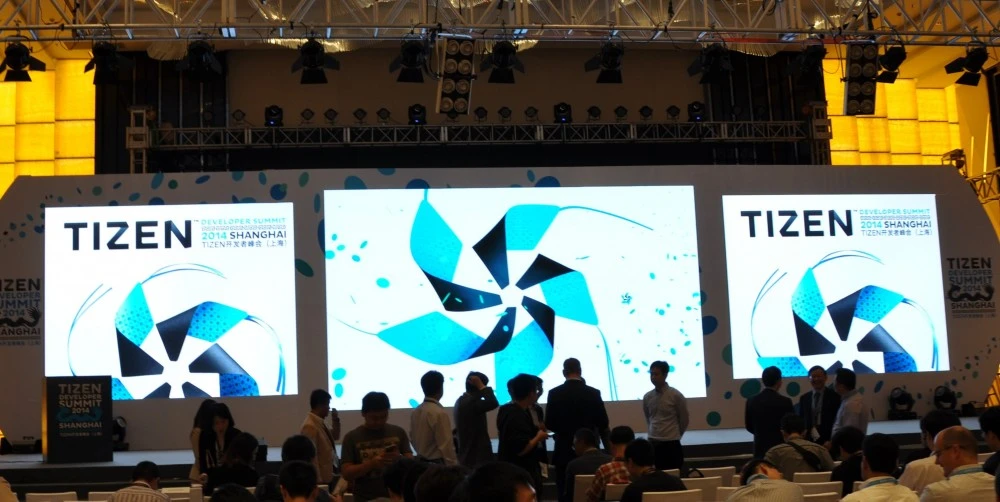
The Tizen Developer Summit is a regional, technical conference for Tizen developers, App developers, ISVs, Platform designers, Operators, OEMs, Hardware vendors, Software vendors, Open source enthusiasts, Academics and anyone engaged in Tizen. For Tizen, this was an opportunity to connect with partners in the China region, partners that must NOT be ignored. Present was Baidu, China Open Source Association, Tencent and of course Intel and Samsung. I had the opportunity to give a presentation on “Practical UI Design for Wearable Apps” at the Summit and the entire schedule can be found here. Presentation slides/audio recordings should be available soon after the conference ends . So, in no particular order, here are important things I learned.
The Tizen Project is Built in Layers
I first heard about the Tizen OS at the Blackberry Live Conference 2013, and interestingly, there was a BB exec that thought it would be a real market challenger. He was right in many senses. Today, Tizen is described as the OS of everything – Mobile phones, smartwatches, TVs , Fridges, Cars (In-Vehicle-Infotainment -IVI), Cameras and many different kinds of embedded devices. However, in order to do make an operating system available on multiple devices with diverse hardware capabilities, an enormous amount of thought and planning must go into the design or architecture of such an OS – abinitio . I believe this is the reason why the tizen OS release has appeared to be slow. To achieve this diversification to multiple device profiles (each group is called a profile), the OS is built to have an underlying core and additional profile codes which serve each device category. Currently, there are profiles Mobile, Wearable Profile, and IVI . Profiles for the smart TV, Fridges and Camera will be available in 2015. It was also mentioned at the keynote that the tizen IVI profile is currently the most sophisticated automotive grade OS implementation at the moment. Kudos!
Tizen is Truly Open Source
There were a couple of sessions that described the workflow for installing and making patch contributions to the Tizen Common repository . Primarily , this is done using GBS , Git for code submission, Gerrit for code reviews/package watching and JIRA for bug tracking. I also met a few of the primary contributors to this system and they were forthcoming and interesting folk. This is remarkable. On one hand, Tizen is backed by companies such as Intel and Samsung that thrive on “patents” “trade secrets” etc. One has to salute their courage in backing an open source project, and guiding it to this stage/point.
Tizen is Expanding and Seeking to Connect with All
Tizen is clearly seeking to connect with all possible industry partners. At the TDS Shanghai summit, there was a strong expression to emphasize the importance of Chinese Industries, and one of the keynote sessions highlighted current support from companies like tencent, baidu,wechat,qq, sina weibo, docomo, etc. I believe this is being done with industries in other regions. Tizen is also seeking to connect with developers – the butter of the ecosystem  . There was a strong push earlier in the year to get developers to make apps for the Tizen platform – the Tizen App Challenge with an impressive 4 Million USD in prizes. Its also quite encouraging to know that the Tizen store offers a 100% revenue share with developers for the first year. For comparison purposes, the Samsung Apps store, Google Play, Apple takes 30% of any app sales that developers make – so what Tizen is doing is remarkable!.
Summary of Sessions
I also attended some really interesting sessions (with what extra time I had after working/stressing on “perfecting” my slides) . There were the keynotes that provided some information on the future roadmap for tizen, the work being done by the China Open Source Promotion Union, Baidu Maps and Tizen etc. There was an interesting presentation about improving the performance of your web apps, and providing UI illusions that make you app appear more responsive . Another on contextual apps, the tizen architecture, and the excellent work being done on tizen automotive (IVI). Links will be added as the slides become available.
My Talk
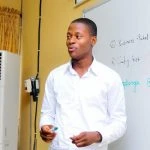
My talk was more or less a summary of findings and user tests I have conducted whilst making a few wearable apps in the last couple of months. There is some theory to it, but that is saved for an academicish paper I am still working on. Below is the short and simple version presented at the conference.
Overall Opinion
Overall, I felt that the event was successful. It was an excellent learning experience, the organization was excellent, there were some rather interesting giveaways. I am very thankful to the Linux Foundation (Intel, Samsung) for the excellent opportunity to attend!My talk also went well, I did get to discuss with 3 participants seeking clarification on design issues related to their tizen wearable apps after my session. Given that the device profiles will soon be released, with SDKs (TV, Automotive), it may be a good idea for developers to consider these areas for their development efforts – theres opportunity to become a niche expert
A couple things though – summit wasn’t as lively (enthusiastic audiences, folks seeking to network etc) as other developer events I have attended by similar large companies (e.g blackberry, google) . But this is to be expected, given the generally gentl/reticent eastern culture. I also expected to see more information put out on sample code for beginner developers – a rather common pain point for wearable developers at this stage of the tizen ecosystem. Finally, it will be interesting to see the Tizen endeavour work more with academics/researchers and explicitly encourage/cultivate these relationships. Academics using tizen to teach, conduct research etc will definitely contribute to growing the ecosystem. Was interesting to see the Keynote on the Chinese OSS Union given by an academic (Qiu Shan Qin, Ph.D).
I will be updating this article as the slides from the summit become available. Especially to add important links to some critical material for those seeking to learn more about the Tizen OS.