
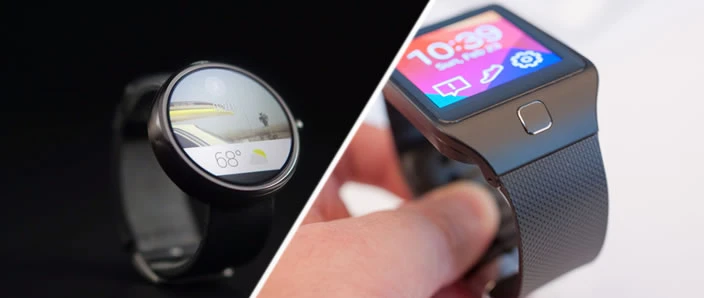
In the last few months the wearable computing industry has seen significant action. Google announced their operating system for smartwatches – Android Wear in March 2014 and Samsung announced their new iteration of the Gear smartwatch line at the 2014 Mobile World Congress – the Gear 2 and Gear 2 neo running a version of their proprietary Tizen operating system. Both devices run different operating systems and as at the writing of this article, have significantly different features. While there are other smartwatch makers in the space such as QUALCOMM Toq , Sony Smartwatch, and Pebble, the most interesting operation systems to watch for right now are the offerings by behemoths Samsung and Google. In this article, I outline main differences between each platform, focusing on things developers should know.
Who Makes Each OS ?
The Tizen OS endeavour is made up of an alliance of various manufacturers, some of which are Intel Corp, Vodaphone, Orange SA,Samsung .etc . It is a Linux based OS with a licensing model that involves software which uses a variety of open source licenses and a proprietary SDK. The Tizen for wearable OS, is a (lighter) derivative of the tizen OS project specifically built for wearable computers such as a smartwatch. The first generation Gear smartwatch has also been updated to run the Tizen for Wearables OS.
On the other hand, the Android Wear OS is based on the existing Android OS but designed specifically for wearable devices such as smartwatches. It is currently being developed and maintained by the Android subsidiary of Google.
Compatibility
Currently the Tizen OS for wearables runs only on the Samsung line of smartwatch devices. Gear 2 and Gear 2 neo. In turn, the Gear 2 and Gear 2 neo only sync up with a collection of Samsung Galaxy smartphones (17 devices currently) .
Android wear is billed to run on the Moto 360 smartwatch and LG smartwatches. Given the open source nature of the android OS, it is likely that other smart-watch manufacturers will also be able to install them on their devices. No formal statement on the licences status (open source or closed source) of android wear is currently available. Smartwatches running android wear will be able to pair with with all android smartphones running Android 4.3 or later OS.
Functionality
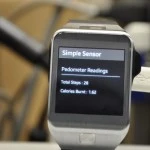
The Tizen OS for wearables supports various app modes such Standalone (can run on smartwatches without any connection to a host app on a smartphone), Integrated and Linked Apps (may require a connection to an installed host app running on a compatible smartphone). The OS also allows apps access sensors on the smartwatch such as heart rate, pedometer and an irblaster as seen in the Gear 2 line of devices .
Currently, developers for android wear cannot make any standalone apps with “limited” functionality. They can only develop android smartphone apps that can push specialized notifications to the android wear smartwatch. i.e nothing gets installed on the smartwatch and there is no access to smartwatch sensors etc. It is expected that future iterations of the OS will provide a richer feature set such as standalone apps, access to smartwatch sensors etc.
Programming Languages : Java vs HTML5
Interested in making apps for the Tizen wearable OS ? All apps are written in HTML5 – essentially, html, css, and javascript. This is quite inclusive as regular web application developers as well as veteran mobile app developers can both get on board.
Given that Android wear is based on the known android OS, notifications ( and possible future standalone apps) are written in good old java.
Connectivity
Both operating systems support the Bluetooth 4.0 standard for connecting to a smartphone and a portable media player.
Developer Tools
Samsung has provided an SDK for developers to easily utilize in creating apps for the tizen for wearables OS. A detailed tutorial on how to get started can be found here. Also, sample code and simple code to access sensor data can be found here .
An Android wear SDK is also available, though not much can be done with it (apart from multipage notifications) as at press time.
Conclusion
Samsung is definitely ahead in the development of its Gear 2 Tizen OS and SDK for developers. Samsung shipped 800,000 units of its first and less successful Gear device and will likely perform better with the Gear 2 line . Despite limitations with compatible devices, there is still a decently large user base, enough to garner developer interest. Samsung has also put together a developer challenge that encourages developers to create apps for the Gear 2 device and receive over 1.25 million USD in total prizes.
Google is catching up fast, and I bet there will be major announcements or updates in the Google IO conference coming up in June 2014. Compatibility with all android devices is definite an edge over Samsung in terms of user base. But also note that android users tend to expect apps for “free”, so monetization strategies need to be carefully designed before developing and launching your app. Usually, Google has some form of developer challenge each year (previous challenges have been on android , appengine, cloud api, etc) and I imagine the next challenge will focus on apps for android wear.
Are there any other key differences between these OS ? Feel free to chime in the comments below.
Update : July 1 – Device Specs
A few wear devices have been released (LG G, Gear Live) and here’s a quick update of the device specifications
| Samsung Gear Live | Moto 360 | LG G | Samsung Gear 2 | |
|---|---|---|---|---|
| Screen Size | 1.63 inches | Unknown | 1.65 inches | 1.63 inches |
| Screen Shape | Square | Round | Square | Square |
| Resolution | 320 x 320 | Unknown | 320 x 320 | 320 x 320 |
| Dimensions | 1.49 x 2.2 x 0.35 | Unknown | 1.4 x 1.8 x 0.39 | 1.45″ x 2.29″ x .39″ |
| Weight | 59g | Unknown | 63g | 68g |
| Mobile OS | Android Wear | Android Wear | Android Wear | Tizen |
| Processor | 1.2 GHz processor | Unknown | 1.2GHz Qualcomm Snapdragon 400 | 1.0 GHz Dual Core Processor |
| Battery Life | 300 mAH | Unknown | 400 mAH | 300mAh, 2-3 days typical usage |
| Storage Space | 4GB | Unknown | 4 GB | 4GB |
| Color choices | Black, Wine Red | Black | White Gold, Black Titan | Charcoal Black, Gold Brown and Wild Orange |
| Other sensors | Accelerometer, Gyroscope, Compass, Heart Rate | Unknown | Gyro, Accelerometer, Compass | Accelerometer, Gyroscope, Heart Rate |
| Price | $199 | Unknown | $229.99 | $199 |
| RAM | 512 MB | Unknown | 512 MB | 512 MB |